 Training
GoalScoping Case Study: Event Planning
Planning a Creative Public Event with Energy & Lasting Impact
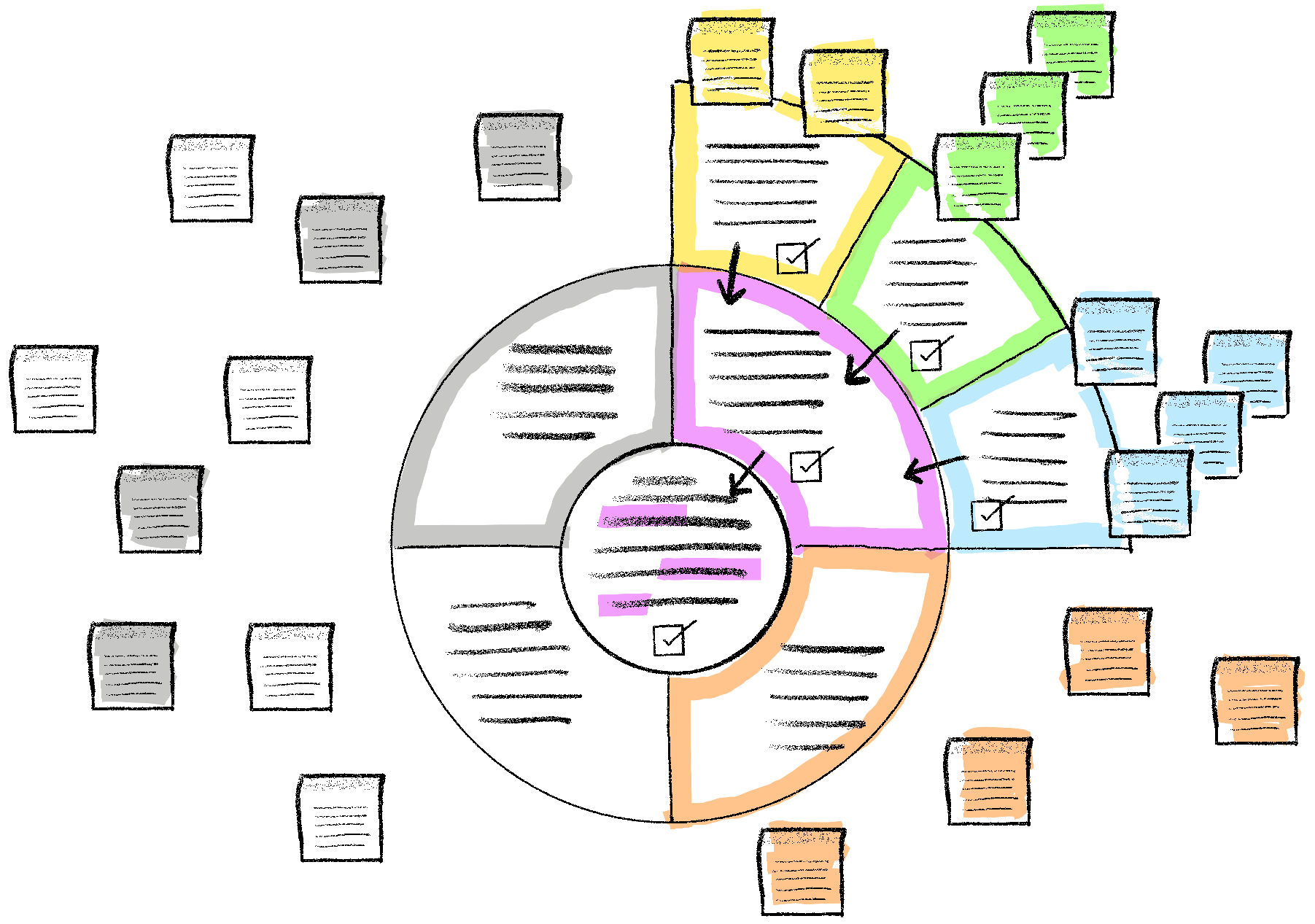
GoalScoping is 100% a visual group exercise. This page attempts to show with words and some sketches, what would happen in a dynamic setting involving a whiteboard (physical or virtual) in a facilitated session with a single, large, evolving GoalScoping diagram. Imagine far fewer bullets and far more human-human interactivity!
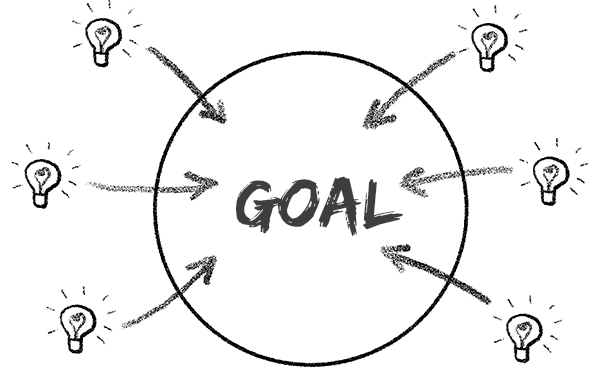
Determine the Main Goal
In simple terms, this one-day event is the idea of one person whose mission is to promote ‘Kiwi Ingenuity’. This is not financially driven — it’s to get the community, and especially the more creative members of the community, to come together and have the chance to be inspired, form networks, and explore ways to connect and think.
The paragraph above is a bit ‘fuzzy’ though and takes time to repeat. It’s better if there is one central goal that can be said quickly and that remains constantly true, even if the underlying detail changes a little. So a brainstorming session is run and turned into one short clear goal.
Initial Brainstorm
- ‘Squeeze-jam moments’
- Attract creative people
- Share/spark ideas
- Trusted/safe space
- Ideas profiled & sorted
- Ideas are taonga
- ‘What step next’ answers
Long Narrative/Discussion (Draft Goal)
Have a well-structured event that anyone can come to, but attracts especially creative types. Find a way to let people find other people like them (create like-minded spaces that people can choose to hang out in).
Trigger creativity in lots of big and small ways. Generate ideas through lots of catalysts, such as a variety of brain-storming games. Make this part of a structured plan, while allowing it to also be free-flowing — not too ‘planned’.
Give people lots of value, both during the event and as something to take away (good feelings, ideas, confidence, contacts …). Set the scene for a long-lasting effect and create demand for a repeat of the event (annual).
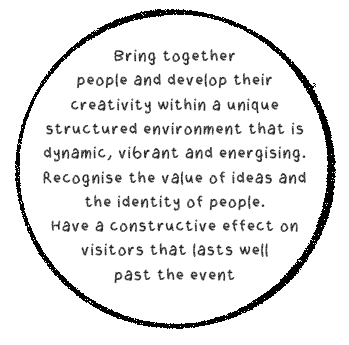
Goal
Bring together people and develop their creativity within a unique structured environment that is dynamic, vibrant and energising
Recognise the value of ideas and the identity of people.
Have constructive effect on visitors that lasts well past the event
Check: The main goal is written as a pure goal, not as a set of actions
Check: Imagine the event has happened and the goal was met. Don’t worry about detail — did meeting the goal as stated, meet your vision? If the answer is “yes”, proceed:
Determine the Sub-goals
The event does not have a lot of manpower. Mostly this is one person doing the planning, who then needs to delegate many tasks to people who do not necessarily talk much to each other. So having too many sub-goals at this stage may make this too hard to manage. Keep It Simple.
State the goals as pure goals, not as actions that lead to an outcome. Analogy: When you buy a drill bit your goal is not to own a drill bit — your goal is to own a hole
Potential Sub-goals
- Structured event
- Ability to be flexible
- Creative spaces
- Trigger ideas
- Help people network
- Help people find groups
- Things to take away
- Pull people to the event
Rationalise Down to 3-6 Sub-goals
The ability to stay flexible increases if the platform/structure is solid. People need to feel both that there is freedom and that there is a sense of order. Absolute chaos is not helpful. Too much order and control though will stifle creativity.
It’s important to place people at the centre and to simply facilitate how they move and who they meet. Let them self-identify, and make it easy for people to find people and places that might result in synergy. Respect for their culture, their identity, their processes, and the value of the ideas themselves (the taonga).
Put additional energy into the event, in the form of ideas, games, triggers. These should keep people surprised and engaged. But also safe.
To give real value, make the event have a long-lasting effect. Way past the day itself. People should say things like “we got this group together at the event last year” and “we know what to do to take this to the next level”
Result: 4 Sub-goals
Platform: A structured and solid platform that allows flexibility while maintaining flow and a sense of direction/order
Identity: Creative people are attracted to the event, are able to self-identify, and are able to find and join people/spaces that resonate with them
Ideation: Ideas seem to flow spontaneously and people are able to explore the whole event
Impact:The event has a long-lasting effect for many, leading to ripple effects in the wider society
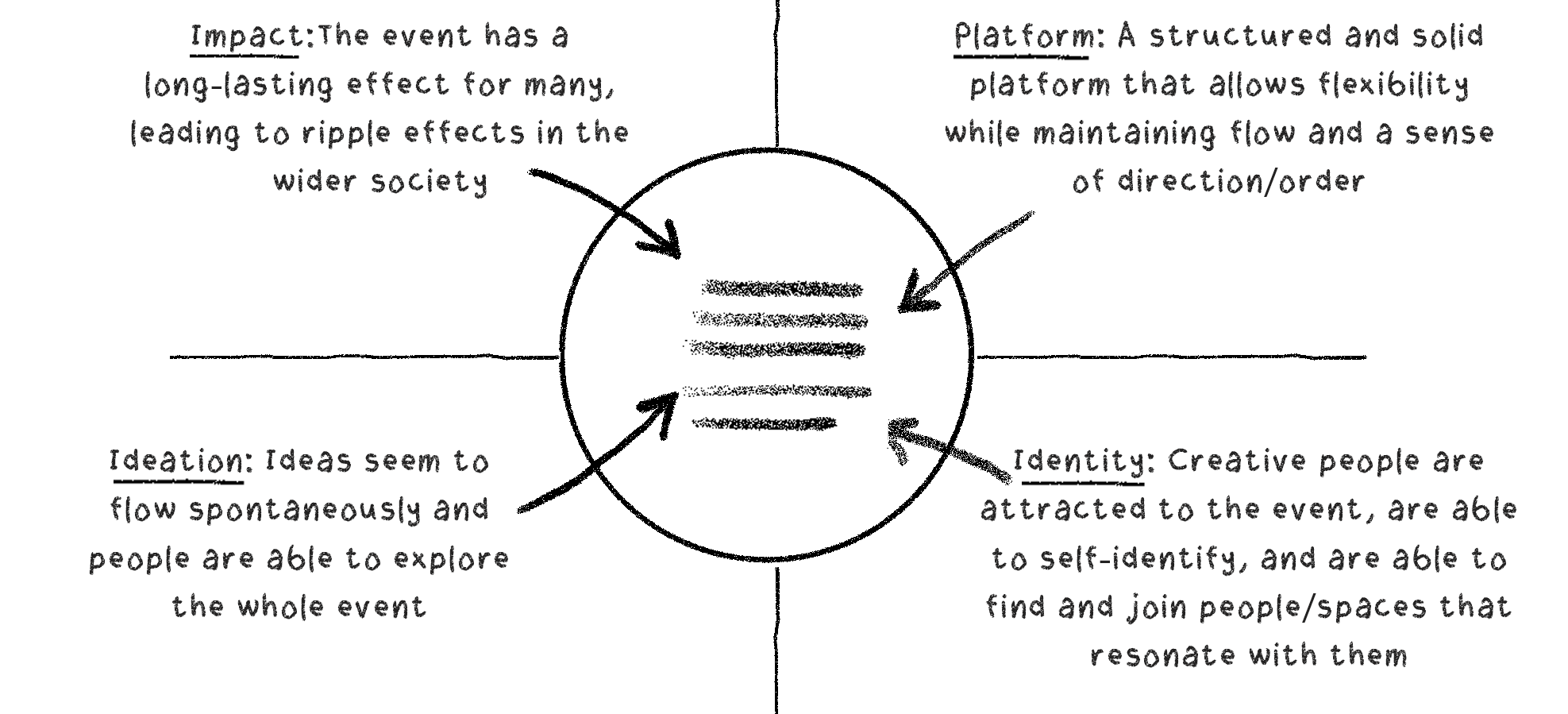
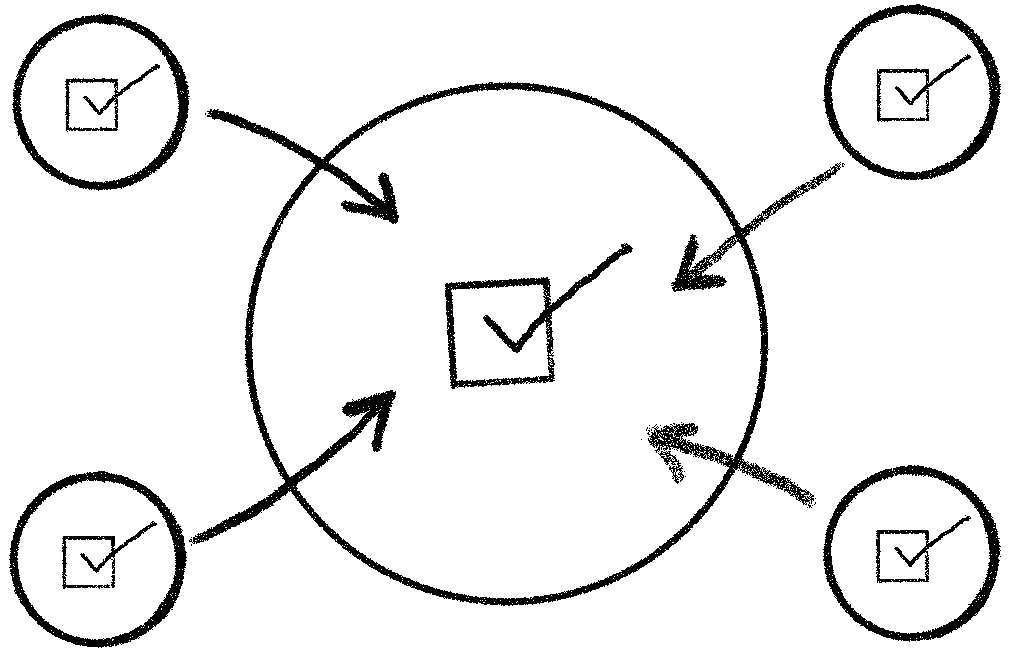
Check: Before moving to the next step, check that the four sub-goals ‘add up’ to the main goal (above)
Check: The goals should not overlap. They might have interdependencies, but they do not repeat parts of each other
Check: Ask the question “if we met all four sub-goals, will we have met our main goal?” If the answer is “yes”, proceed:
Outline next-level goals for sub-goal 1, “Platform”
Remember that the first sub-goal is “A structured and solid platform that allows flexibility while maintaining flow and a sense of direction/order”. We need to break this down into 3, 4, 5 or 6 subsub-goals. Only then do we start to think about the “how”.
Platform: Ideas
- Outer: Community
- Middle: Skills groups
- Core: Active dev work
- Conceptual glue
- Connection of Intent
- Physical & virtual
- Road system/tube map
- Snakes & ladders
- x
- x
- x
Platform: Focus in on 3-6 Subsub goals
The platform should consist of layers or circles (closer to centre, further from centre) that allow people to dive in deeper. The ‘conceptual glue’ is the transparency and connection between layers, so people can see what is happening where.
‘Connection of Intent” means people are there to be active and see ‘what do I need/do next’. The event allows them to find the next thing they need, personally.
The event works both physically and virtually, and can go global. Restrictions to country/tech should be avoided. What works on the ground in NZ should work virtually in, say, Canada
Platform: Subsub goals
Layers of participation
Pathways for Progress
Works anywhere, anyhow
Outline next-level goals for sub-goal 2, “Identity”
Identity: Ideas
- Hear people’s stories
- Give their journey a voice
- Ideas for identity
- Brokerage around finding your way
- Show collaboration opportunities
- Show cross-skilling opportunities
Identity: Focus in on 3-6 Subsub goals
x
x
x
Identity: Subsub goals
Outline next-level goals for sub-goal 3, “Ideation”
Ideation: Ideas
- Hijack current thinking
- Show idea dimensionality
- Trigger synesthesia
- Reshape ideation dynamically
- Location service to show idea/s proximity
- Visual identification to show ideation style/area
- Complementary ideation — the other side
Ideation: Focus in on 3-6 Subsub goals
x
x
x
Ideation: Subsub goals
Outline next-level goals for sub-goal 4, “Impact”
Impact: Ideas
- Physical reminders
- External accessible further knowledge
- Make external supporting groups part of the event
- People can connect after the event
- Tracking ideas/outcomes easily and creatively
- Easy access to support services
Impact: Focus in on 3-6 Subsub goals
x
x
x
Impact: Subsub goals
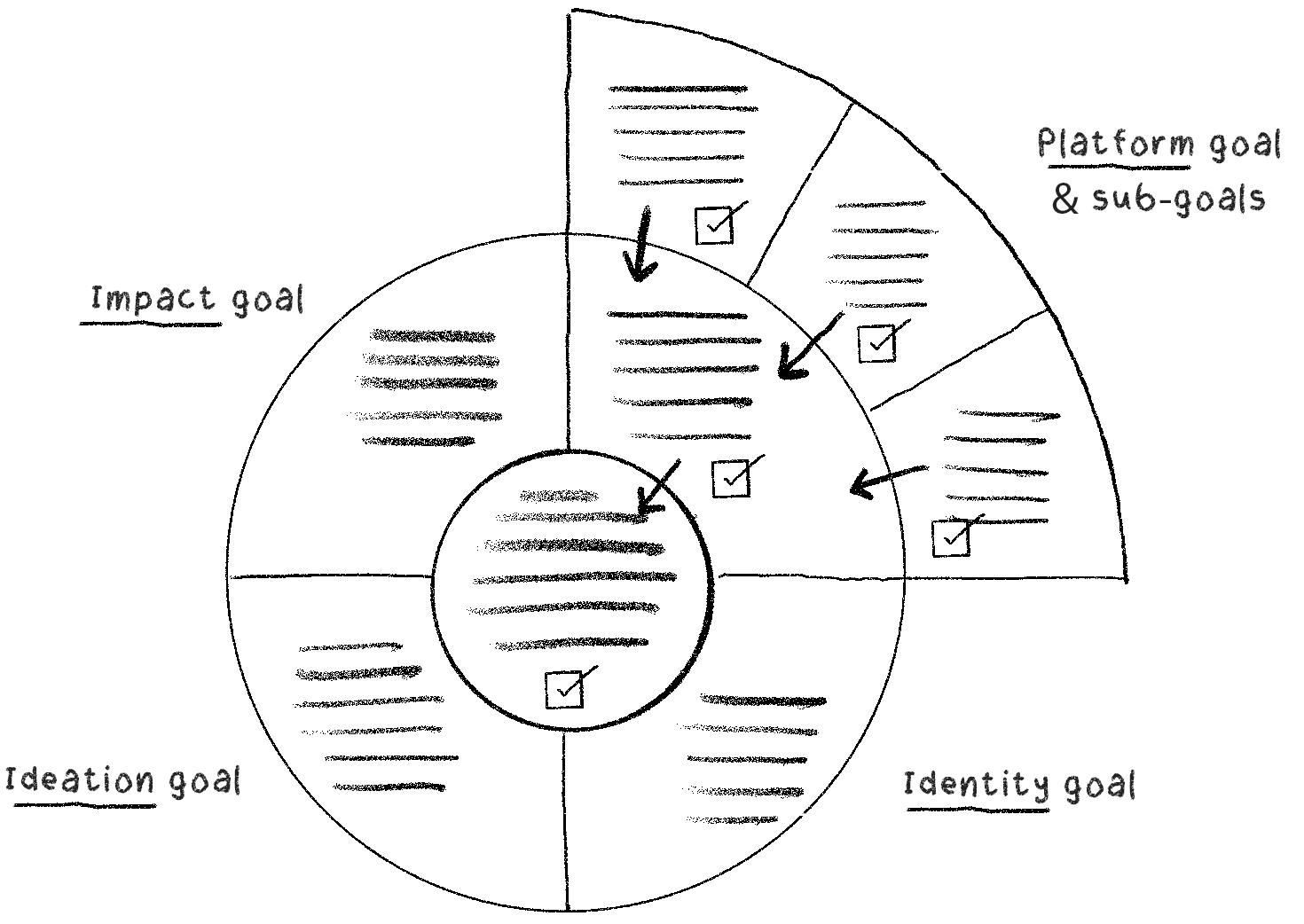
There are now four sub-goals and 16 subsub goals defined. This is granular enough to define tasks in these 16 areas.
Assign tasks to subsub-goals
Tasks are assigned visually on the radial chart, showing which task belongs to which subsub goal. As the in-progress chart shows below, parts of the plan are well-developed into subsub-goals and associated tasks. If time is critical, work can begin even while the rest of the plan is still being developed.
Task List
- Reach out to CHQ
- Second item
- Third item which may wrap
Task Description & Notes
Ask Creative HQ for involvement | Ask CHQ for an app designer
Goal/s
x